
Pike lures
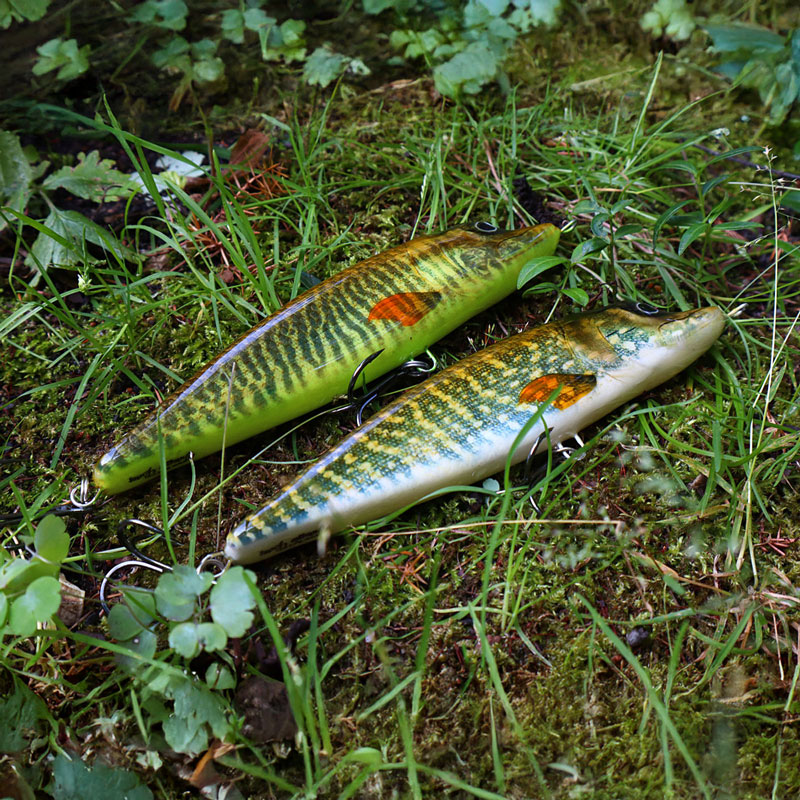
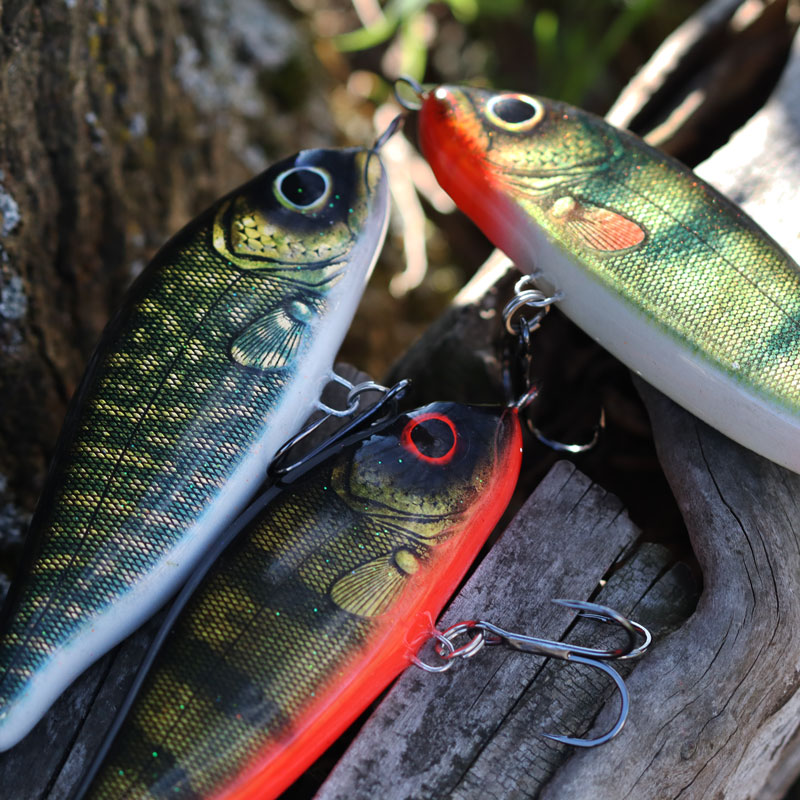

Pike Lures – Jerkbaits, Gliders, Soft Lures and Tail Baits
Choosing the right pike lure depends on the fishing depth, water clarity, size of the prey fish and the activity of the pike. At Jurassic Lures, you will find handmade hard lures, gliders, jerkbaits, tail baits and soft lures designed specifically for pike fishing.
Our lures are developed and tested in real fishing conditions. Different sizes, sink rates and colour patterns allow you to match the lure to shallow bays, weed beds, open water and deeper areas where large pike may be holding.
Jerkbaits and gliders for pike
Lipless jerkbaits are among the most effective lures for targeting pike. Controlled rod taps make a glider move from side to side, imitating an injured, weakened or escaping prey fish.
Models such as Venom and Champion can be worked with short rod movements or simply by using the reel or baitcaster handle. Changes of pace and well-timed pauses help create an irregular action that often triggers following pike to strike.
Slow-sinking gliders are particularly useful over vegetation and in shallow water. Sinking models allow you to reach deeper fish and keep the lure in the strike zone for longer.
Tail baits with soft, replaceable tails
Tail baits combine the body and side-to-side movement of a hard lure with the additional action of a soft tail. The tail creates extra movement during the retrieve, direction changes and the drop.
Gaspar Tail Bait provides stable, powerful glides and is an excellent choice for fishing with Live sonar. The 12 cm version includes a threaded belly slot for screw-in weights, allowing you to adjust the sink rate and reach suspended pike faster.
Baby Pike Tail Bait is designed for slower jerking, especially in shallow bays and above vegetation. The 17 cm version can be used with 11 cm and 17.5 cm replacement tails. The smaller tail allows a faster, more aggressive retrieve, while the larger tail creates stronger movement and a more visible profile.
Soft pike lures
Soft lures are a versatile choice for both shallow and deep water. They can be retrieved steadily, worked close to the bottom or used with pauses and changes of speed.
Their flexible body creates natural movement, while different rigging weights allow you to control the fishing depth. Larger soft lures are especially effective when targeting big pike feeding on substantial prey.
Natural and high-visibility colour patterns
The Jurassic Lures range includes natural prey-fish patterns, holographic finishes and strong fluorescent colours. Natural colours are a good choice for clear water and cautious pike. High-contrast and fluorescent patterns provide better visibility in stained water, low light and overcast conditions.
Select the lure size, sink rate and colour that best match your fishing spot and preferred technique. Whether you fish with spinning gear, a baitcasting setup or Live sonar, the right presentation can make the difference between a follow and a confident strike.
Najczęściej zadawane pytania
To start with, it’s best to prepare a few lures with different actions, rather than buying many similar models. A good set includes a jerkbait for active retrieving, a soft plastic lure for a more subtle presentation, and a tail bait that combines a distinct body action with tail movement. It’s a good idea to have lures in both natural and high-contrast colors, as well as in at least two sizes. This allows you to adapt your fishing technique to the depth, water clarity, and current activity level of the pike.
The most versatile lures are those that are about 10–16 cm long. They work well in many fishing spots and can attract both smaller and larger pike. Lures measuring 7–12 cm are best used when the prey is small, in shallower water, or when fish activity is low. Lures measuring 15–20 cm and larger are a good choice for selectively targeting larger predators, especially when pike are feeding on large roach, perch, or bream.
No. Even medium-sized, and sometimes even small, pike can strike at a large lure. A larger profile is easier to spot and may present a more rewarding bite to the fish. Large lures help reduce the number of accidental bites from small fish, but they do not guarantee that you’ll catch only large pike. When choosing them, you must also consider the depth of the fishing spot, the size of the natural prey, and the strength of the rod and other components of your rig.
A jerkbait works well when you want to retrieve the lure with sideways jerks and set its own rhythm. A soft plastic lure is a good choice for slower retrieves, letting it sink, and thoroughly covering different depths. Tail baits feature a distinct tail action and can be effective both during a steady retrieve and when retrieved with pauses. The best choice depends on the depth, amount of vegetation, water temperature, and pike activity.
In clear water, it’s usually best to start with colors that resemble natural prey, such as perch, roach, bleak, or pike. In murky or tea-colored water, and in low light, patterns with high contrast—featuring black, white, orange, yellow, or a strong flash—may be more visible. There is no single best color for every fishing spot. It’s a good idea to have at least one natural-looking option, one dark option, and one clearly provocative option.
In clear water, lures with natural colors, a distinct profile, and a subtle sheen are a good starting point. It’s worth matching the pattern to the fish found in the fishery, such as perch, roach, or bleak. In calm conditions, a more subdued retrieve and a longer pause often help. If pike are following the lure but not striking, you can reduce its size, change the retrieve speed, or use a more subtle color.
In water with limited visibility, it’s best to use lures that create a distinct silhouette and strong contrast. Dark backs, black elements, light bellies, gold or copper reflections, and orange and yellow accents work well. The lure’s action is also important, as pike respond not only to its appearance but also to its movement and the ripples it creates in the water. In such conditions, a larger profile and a steady retrieve with distinct changes in pace tend to be effective.
In shallow areas and over vegetation, lures that run shallow, sink slowly, or are worked high in the water column work best. At medium depths, you can use heavier soft plastics, sinking jerkbaits, and tail baits worked with controlled pauses. Deeper spots require a lure that can be quickly brought down to the appropriate water layer and held there while retrieving. Control over the lure and its presentation near the fish’s location are more important than maximum depth.
Your retrieve technique should be adapted to the type of lure and the fish’s activity level. Jerkbaits can be retrieved with short or longer jerks, interspersed with pauses. Soft plastic lures work best when retrieved at a steady pace, on the drop, or with a gradual retrieve. Tail baits can be retrieved at a steady pace or with bursts of speed followed by pauses. When pike are active, it’s a good idea to pick up the pace. When bites are sluggish, a slower retrieve and longer pauses are often more effective.
Yes. A pause changes the lure’s action and can provoke a pike that was previously just following it. During the pause, the lure may hover, sink slowly, or rise to the surface—depending on its design. It is precisely then that it often looks like a weakened or disoriented fish. It’s a good idea to adjust the length of the pause to the water temperature and the predators’ reactions. Sometimes a short pause is enough, but when fish are feeding slowly, a pause lasting a few seconds may be more effective.
In the spring, it’s a good idea to thoroughly fish shallower areas that warm up faster, as well as areas near vegetation, using lures retrieved slowly and at a controlled depth. In the summer, pike can be found among vegetation, near drop-offs, and in cooler water layers, so lures with varying buoyancy and weight are useful. In the fall, larger jerkbaits, soft plastics, and tail baits often work well, as they create a distinct silhouette and can mimic larger prey.
Lures for large pike should have the right profile, a durable construction, and strong mounting components. It’s a good idea to choose a size that matches the prey found in the fishing spot and a model that can be worked at the depth where larger fish are located. Large pike do not always require a very fast and aggressive presentation. Often, a calm, steady retrieve of a large lure with distinct changes in pace and controlled pauses is effective.
Handcrafted lures are usually produced in smaller batches, which allows for more precise control over the finish, action, and placement of details. This makes it possible to create unique color combinations, custom scale patterns, and designs tailored to specific retrieving techniques. At Jurassic Lures, lures are designed with pike fishing in mind and tested in real-world conditions. When choosing a lure, the most important factor remains matching the model, size, and action to the specific fishing spot.